
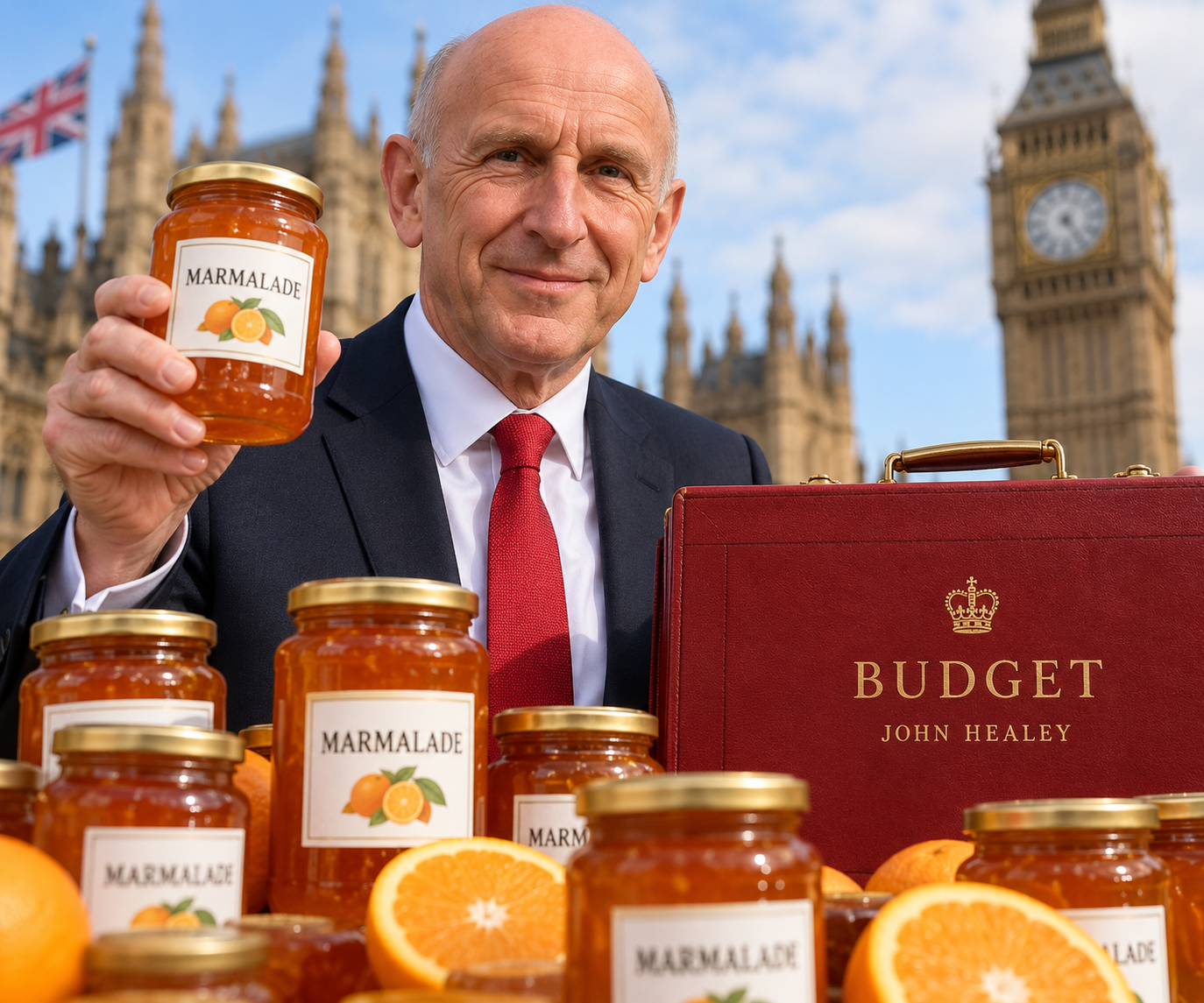
John Healey’s Marmalade Budget
John Healey’s Budget 2026: Cheaper Marmalade, Gherkins and the Cost of Living
27 October 2026 | City Lynx News & Current Affairs
Britain’s Chancellor, John Healey, has unveiled plans to make everyday supermarket products cheaper, including marmalade, gherkins, chocolate and baked beans, ahead of his first Budget on Wednesday, 28 October 2026.
The announcement forms part of the government’s campaign to ease the cost-of-living pressures facing millions of households across the United Kingdom.
However, with families continuing to struggle with rising household bills, the announcement has also sparked political debate over whether reducing the cost of marmalade and other supermarket products will make a meaningful difference.
Cheaper Marmalade: What’s Actually Changing?
The Chancellor has announced plans to suspend import tariffs on more than 100 products, potentially reducing costs for businesses importing certain foods and household essentials.
Among the products included are:
- Marmalade and citrus jams
- Gherkins and pickled vegetables
- Garlic
- Chocolate-coated wafers
- Toffees and confectionery
- Plant-based drinks
- Certain medicines and throat pastilles
- Kerosene and fertilisers
One example is imported marmalade, which currently faces a tariff of 20%, alongside an additional charge of £19 per 100kg.
By suspending these charges, the government hopes businesses will be able to offer lower prices to consumers.
However, cheaper imports do not automatically guarantee cheaper supermarket prices. Retailers will ultimately determine how much of any saving reaches customers.
How Much Could Families Actually Save?
According to the government’s estimates, the tariff reductions, combined with existing suspensions, could save households up to £21 per year.
That works out at approximately £1.75 per month.
While any reduction in household expenditure may be welcome, the potential savings are relatively modest when compared with the wider financial pressures facing families.
Energy bills, housing costs, food inflation and taxation remain major concerns for households throughout Britain.
The announcement therefore raises an important question: will small reductions in supermarket prices be enough to make families feel financially better off?
More Than Just Marmalade
Although marmalade and gherkins have attracted much of the attention, the Chancellor’s proposals extend beyond supermarket shelves.
The government has also announced several measures designed to support workers, parents and carers.
Business mileage allowances
Plans include making the 55p-per-mile tax-free mileage rate permanent for the first 10,000 qualifying business miles, with an increased rate of 35p per mile thereafter.
Support for unpaid carers
Changes to Carer’s Allowance would replace the existing earnings cliff-edge with a more gradual system, reducing the risk of carers losing their entire allowance when their earnings exceed the permitted limit.
Paternity support
Self-employed fathers and eligible partners are also expected to benefit from expanded paternity pay arrangements.
These changes could have a more substantial financial impact on qualifying individuals than the proposed reductions in food import tariffs.
Why Is the Chancellor Making These Changes?
John Healey is preparing to deliver his first Budget against a challenging economic backdrop.
International conflicts, particularly those affecting the Middle East and Ukraine, have contributed to uncertainty in global energy markets.
Higher energy prices can increase transport, manufacturing and food production costs, ultimately affecting the prices consumers pay.
The government argues that targeted measures, alongside wider economic reforms, can help provide some immediate financial relief.
However, the opposition has questioned whether the measures go far enough.
Conservative politicians have criticised the focus on cheaper gherkins and marmalade, arguing that households need more substantial support with taxation and living costs.
The government maintains that the announcements form only part of a broader Budget package.
What Can We Expect From the October Budget?
The Chancellor’s Budget, scheduled for Wednesday, 28 October, is expected to address several major economic issues.
These include household energy costs, business investment, regional economic development, taxation and support for families.
There is also considerable interest in how the government intends to balance additional spending commitments with its promises of fiscal discipline.
For businesses, particularly smaller companies facing higher operating costs, the detail of the Budget will be especially important.
For households, attention will focus on whether the Chancellor introduces measures capable of delivering meaningful improvements to disposable income.
Until the Budget is delivered, some of the wider proposals remain unconfirmed.
City Lynx Perspective: Will Cheaper Marmalade Make a Difference?
The decision to reduce import tariffs on everyday products is an unusual headline for a major Budget announcement.
Marmalade may be a familiar British breakfast favourite, but its inclusion has highlighted the difference between relatively small consumer savings and the larger financial challenges facing the country.
For some households, every saving matters. For others, the prospect of saving up to £21 annually may seem insignificant alongside rising monthly expenses.
The more important question is whether the Chancellor’s wider Budget can address the financial pressures affecting households and businesses over the longer term.
Reducing import costs could benefit businesses and consumers, but the eventual impact will depend on how much of those savings is passed on through lower retail prices.
City Lynx Final Thoughts
John Healey’s plans for cheaper marmalade, gherkins and other everyday products have certainly attracted attention ahead of the 2026 Budget.
However, the announcement represents only one small part of the government’s economic programme.
With households continuing to face pressure from energy bills, housing costs and everyday expenses, the Chancellor’s wider decisions on taxation, spending and economic growth are likely to have a much greater influence on household finances.
The question now is whether Wednesday’s Budget will deliver the broader financial relief that families and businesses are looking for.
City Lynx – Search. Discover. Thrive.